
01 / Structure8 min
Read a lateen sail from shore
Separate mast, yard, cloth, sheet and hull before interpreting the boat’s course.
Open note →An Egyptian river field journal
A felucca is not a timeless silhouette. Its long yard, shifting cloth, hull position and landing route respond to working decisions made on moving water.
Four river notes
Begin with what a photograph or shoreline view can support. Name the visible structure, preserve uncertainty and keep real navigation in the hands of the crew.
Separate mast, yard, cloth, sheet and hull before interpreting the boat’s course.
Open note →
Read the channel as a sequence of banks, gaps, lee water and active crossings.
Open note →Look beyond the sail to mooring space, approach lines, engines, ferries and shore labour.
Open note →
Use light, surface texture and landing activity without turning one image into live conditions.
Open note →
The four-part shoreline scan
Choose one stable bank, pier or building line. Without a reference, boat motion and camera movement are easy to confuse.
Compare sail shape with flags, ripples, tree movement and loose cloth. One clue may be sheltered or delayed.
The bow’s direction does not by itself establish the path over the water. Current and manoeuvre can change the visible relationship.
Only those operating the boat can judge the immediate route, load, weather and landing. Shore observation is not piloting.

Field principle
Confirm the operator, route, duration, return point, price and safety expectations before boarding. Do not infer capacity or conditions from another boat.
Once aboard, follow the crew’s seating and movement instructions. Keep hands, equipment and bags inside the boat, and never ask for a manoeuvre only to improve a photograph.
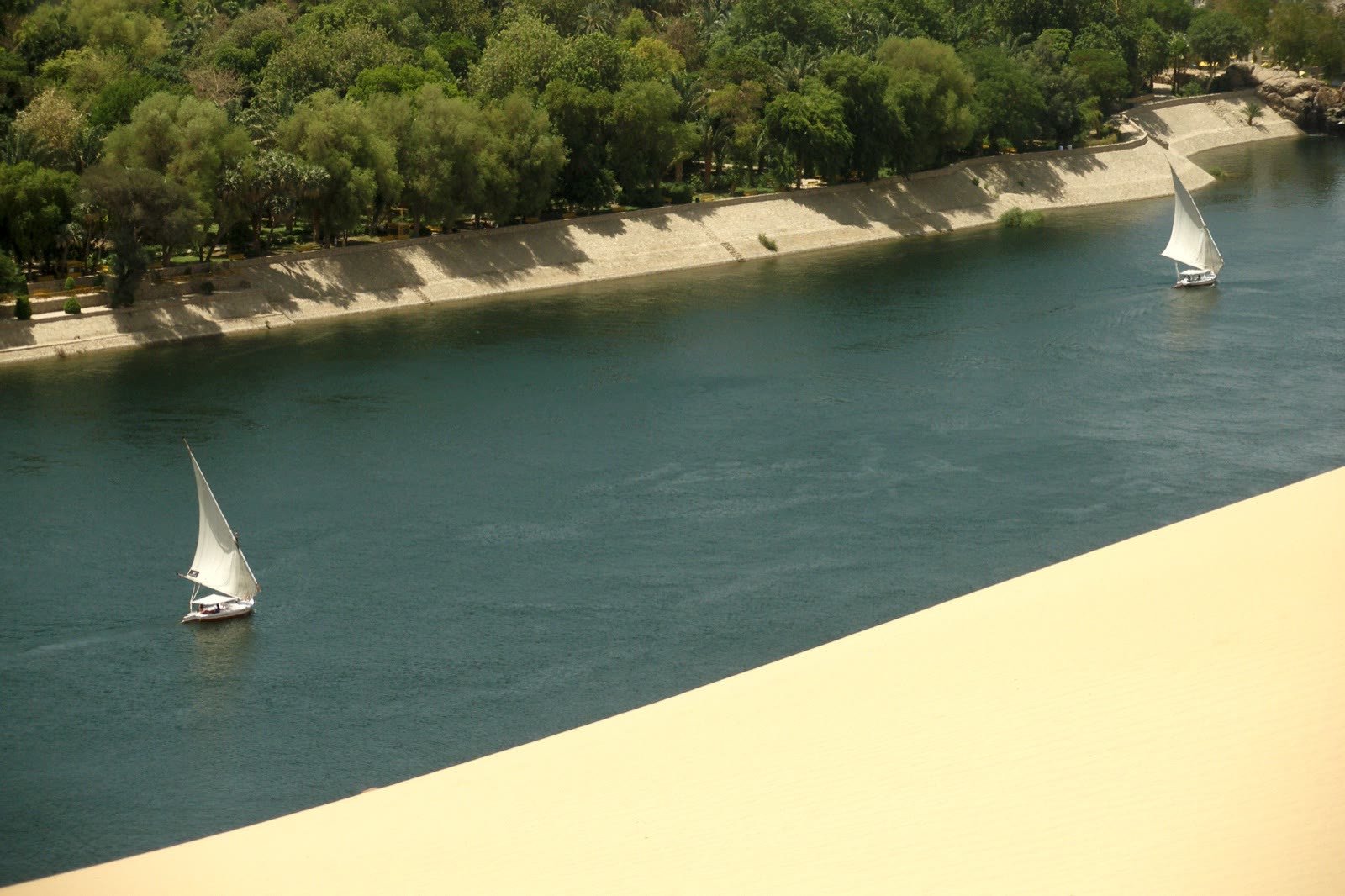
Egyptian Felucca Ride on the Nile. Photo: Ahmed Emad H, CC BY-SA 4.0.
Read before boarding