Note 04 / light and evidence
Cairo river evening: light without a timetable
Evening light can clarify a sail’s outline while hiding the very conditions that produced its movement. Read the image as a moment, not a promise.
.jpg)
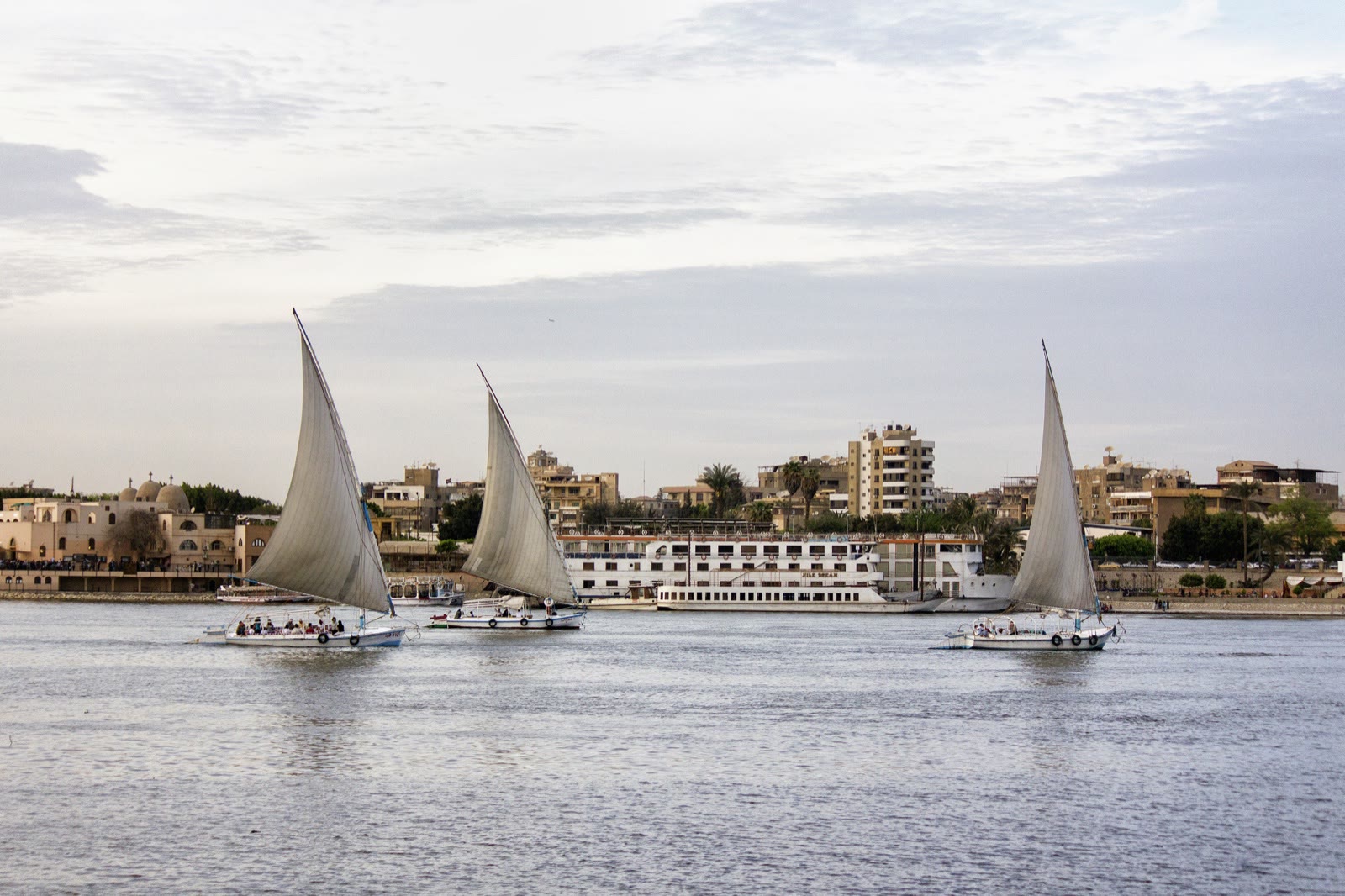
Late light simplifies the river. A bright sail can stand against a darker bank, reflections stretch across the surface and the hull becomes a narrow shape between them. This graphic clarity is attractive, but it is selective. Exposure may preserve the cloth and lose the crew, deepen the bank into a silhouette, or smooth fine water texture. The photograph remains useful when those limits are treated as part of the evidence.
Begin with the direction of light
Look for the bright edge of the sail, shadow inside folds, highlights on the water and the relative tone of the bank. Together they suggest where light enters the frame. They do not establish an exact time: season, weather, camera settings, editing and viewpoint all change the appearance. “Low warm light” is more defensible than naming a minute or even assuming sunset when the source provides no capture time.
A backlit sail may reveal thin areas and seams while concealing colour. A front-lit surface may show paint and fabric but appear flatter. Pairing one wide frame with a closer exposure can preserve both river context and material detail without pretending that either is neutral.
Reflections describe surface and exposure
A long reflection does not map the current. It depends on wave facets, viewing angle and the position of the light source. Broken highlights can show a textured surface, but wake from another vessel may be involved. Smooth dark water can result from shelter or exposure settings rather than stillness. Compare several areas of the same frame before using surface language.
Evening caption test
Can the sentence distinguish what is visible from what was supplied by the image source? Keep location attribution, light description and vessel structure separate. Remove route, duration, weather and mood claims that the frame cannot support.
Silhouettes remove identity as well as detail
People may become unidentifiable shapes in strong contrast, but higher-resolution files can retain faces, clothing and activity. Permission still matters when a person is recognisable. Conversely, darkness should not be filled with an invented story about a captain, family or private celebration. A figure’s position can be described without assigning a role unless the source confirms it.
Boat details disappear too. A dark hull cannot be inspected for capacity, equipment or condition, and a glowing sail does not reveal the state of every line. A beautiful image should never function as evidence that a current trip is safe or suitable.
The bank supplies a stable reference
Buildings, bridge elements, trees and moored vessels can help separate boat movement from camera panning. Watch a sequence when possible: the sail’s position against one fixed feature gives a clearer path than the bow alone. From a single image, record layering—boat in front of bank, wake behind hull—without drawing a complete course.
Cairo’s river edges contain many simultaneous uses. A narrow crop may remove motor traffic, larger vessels, bridges and landings outside the frame. Keep one contextual image so the felucca is not presented as alone on empty water.
Evening changes visitor decisions
Lower light affects visibility, photography and the ability to confirm a meeting or return point. Conditions on shore and water can also change quickly. A visitor considering a ride should agree on the exact landing, duration and return before boarding, then follow the operator’s current decision about whether a trip proceeds. This article supplies no schedule or operating guarantee.
Do not delay a return, request a repeated pass or ask a crew to hold a position as light fades. The image is secondary to navigation and the agreed trip. Keep bags and camera straps controlled so they do not cross lines or movement areas.
Atmosphere needs precise language
Words such as calm, timeless and romantic describe a viewer’s response more than the physical scene. They can erase traffic, work and contemporary city life. Replace them with observable qualities: low contrast on the far bank, a full sail, broken gold reflection, clustered lights or a visible landing. The writing becomes more vivid because the details are shared, while the emotional conclusion remains open.
Keep the date outside the promise
A Commons image is a documented past frame even when its scene still looks familiar. Credit the creator and file page, and do not imply that it shows the river today. Current opening, price, wind, river traffic and public access must be checked at the time and place where a decision is made.
Cairo’s river evening rewards careful looking precisely because light hides and reveals at once. The sail may become clearer as the operation becomes less visible. A responsible note holds both facts together: a strong triangle on the water, and substantial uncertainty beyond it.