Note 03 / landing and shore work
Luxor and the working waterfront
The open sail receives most of the attention, but a river trip also depends on mooring space, approach lines, boarding decisions and people working at the bank.
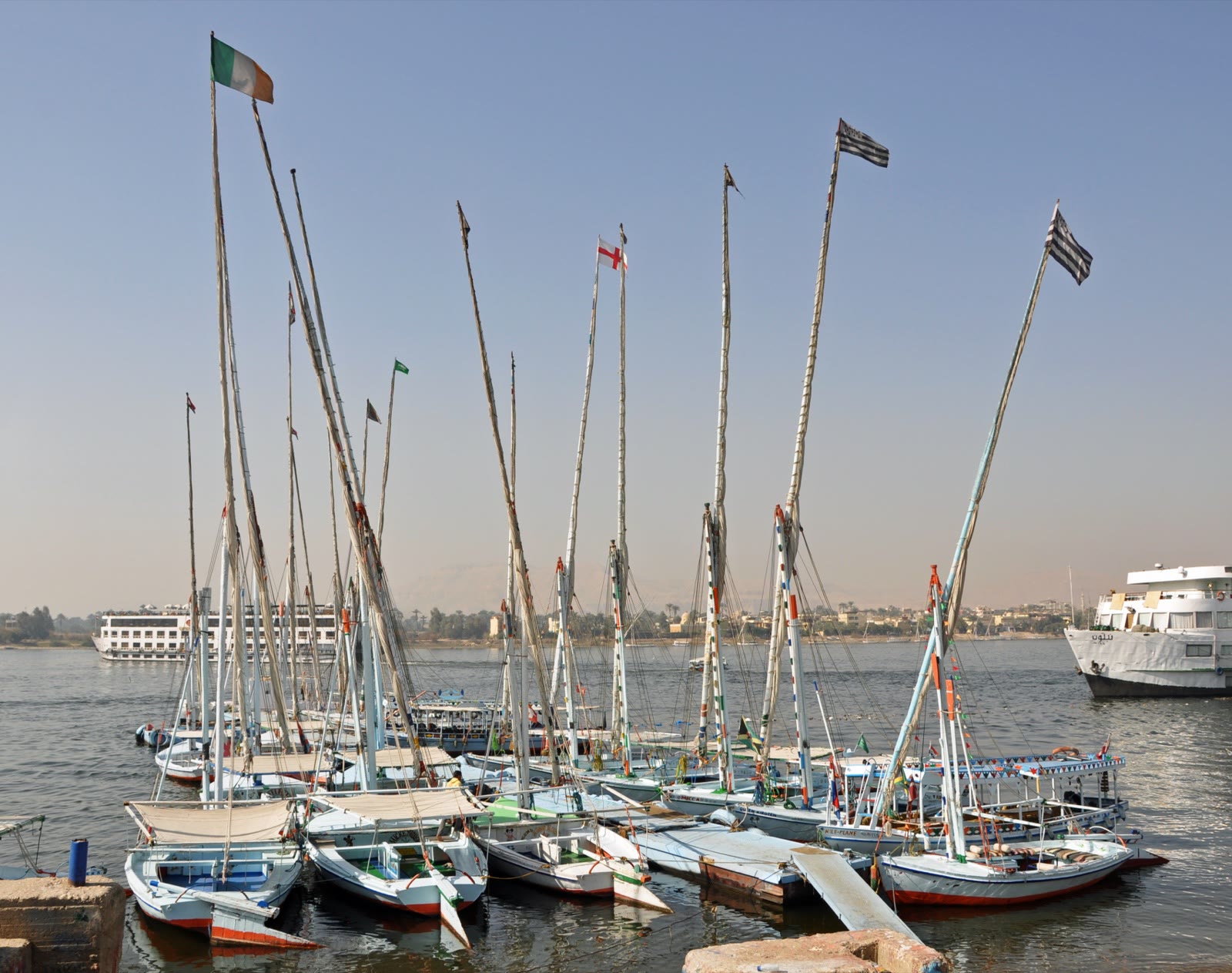

A waterfront is often edited out of the felucca image. Photographers wait for open water, isolate the triangular sail and remove the landing that made the trip possible. At Luxor, a better reading includes the full sequence: a vessel held or moored near shore, an agreed boarding point, a route through other traffic, and a return that requires space and coordination. The bank is not visual clutter. It is part of river operation.
Start with the edge condition
Look at how land meets water. A high wall, sloped bank, floating stage, steps or another vessel alongside will shape how people approach. The edge visible in a historical photograph may have changed, and a public promenade does not make every adjacent landing public. Signs, barriers and instructions on site take priority over an image or article.
Note differences in height between the waiting area and deck. They can change with load, wake and river conditions. Do not test a gap by stepping onto a boat before the operator invites boarding, and do not assume that a route used by crew is suitable for visitors.
Mooring is an active arrangement
Lines leading from vessel to shore, to another boat or to a mooring point hold a working pattern that can change quickly. A line that appears loose may be about to take load; a tight line can create a trip or pinch hazard. Keep equipment, feet and children away from the line path. Never untie, move or sit on mooring gear.
Waterfront sequence
Observe in order: public approach → waiting point → edge or gangway → vessel entry → crew working zone. If any part is unclear, stop at the last confirmed public position and ask.
Several boat types share the scene
A felucca may appear beside ferries, launches, service craft, cruise vessels or small motorboats. Their wake, speed and approach needs differ. A still photograph can make them look safely separated while hiding the direction and timing of movement. Preserve surrounding traffic in at least one wide frame before making close studies of a sail or painted hull.
An engine visible on or near a boat does not automatically contradict the word felucca, prove how that vessel normally operates or identify its current use. Describe the engine, sail and hull that are visible without forcing every example into a pure category.
Departure is a chain of small actions
Before a sail becomes the main visual element, people may distribute weight, free lines, push clear, organise the yard or move through a sheltered approach. Which steps occur, and in what order, belong to that crew, vessel and moment. Visitors should not help unless specifically instructed and capable of doing so safely. Unrequested assistance around water and tensioned lines can make work harder.
Once underway, the landing remains relevant. The planned return point, fading light, traffic and wind can influence the trip. Windward Nile does not publish fixed trip durations because a duration agreed with one operator or seen on one day is not a universal promise.
Shore labour deserves context and consent
A person handling a line, steadying a boat, carrying supplies or speaking with passengers is doing work, not providing scale for a travel photograph. Ask before making an identifiable image and explain likely publication. Do not request a repeated throw, pose or boarding movement. A genuine action may be brief because it needs to be efficient.
Backgrounds can reveal more than intended: faces, vessel names, phone numbers, payment activity and private conversations. Review the whole frame before publishing, and crop or withhold it when permission did not cover those details.
Read wear without diagnosing condition
Paint, timber, fabric and fittings show use, repair and exposure, but a shore observer cannot certify seaworthiness from colour or surface wear. Fresh paint does not prove good maintenance; faded paint does not prove danger. Ask the responsible operator about the specific trip and follow current safety requirements. If arrangements feel unclear, do not board.
Separate negotiation from published fact
A visible conversation at a landing does not establish a standard price, route or service. Confirm the whole agreement directly: operator, boat, passenger group, route, duration, return point, currency, total price and what changes if conditions shorten the ride. Keep the answer with that agreement rather than presenting it online as a permanent citywide tariff.
Let the bank remain in the story
Luxor’s felucca scene becomes more informative when the waterfront is allowed to stay visible. Lines, waiting space, neighbouring craft and shore workers explain how the sail reaches open water and returns. The river image is not diminished by logistics. It gains the contemporary relationships that the perfect isolated triangle leaves out.